










Water Softener Guide: Softer Water, Cleaner Home, Fewer Headaches
Hard water is one of those everyday problems that slowly wears you down. At first it’s just a few spots on the shower door or a cloudy film on your glasses. Then it turns into stubborn buildup around faucets, towels that feel rough no matter what detergent you use, and a water heater that seems to lose power over time. If any of this sounds familiar, you’re not alone. Many households deal with hard water without realizing what’s causing the mess. A water softener is often the simplest way to fix the issue at its source, and once you understand how it works, choosing the right system becomes much easier.
What Hard Water Really Is
Hard water simply means your water contains higher levels of minerals, mainly calcium and magnesium. These minerals aren’t “dirty,” and they aren’t usually dangerous to drink in normal amounts. The trouble starts when you heat water, evaporate it, or mix it with soap. Calcium and magnesium don’t play nicely with cleaning products. They reduce lather, leave residue behind, and form scale inside pipes and appliances. Over time, scale can narrow water lines, clog fixtures, and coat heating elements like a hard shell. That’s why hard water causes both cosmetic issues you can see and mechanical issues you don’t notice until something stops working properly.
Signs Your Home Is Fighting Hard Water
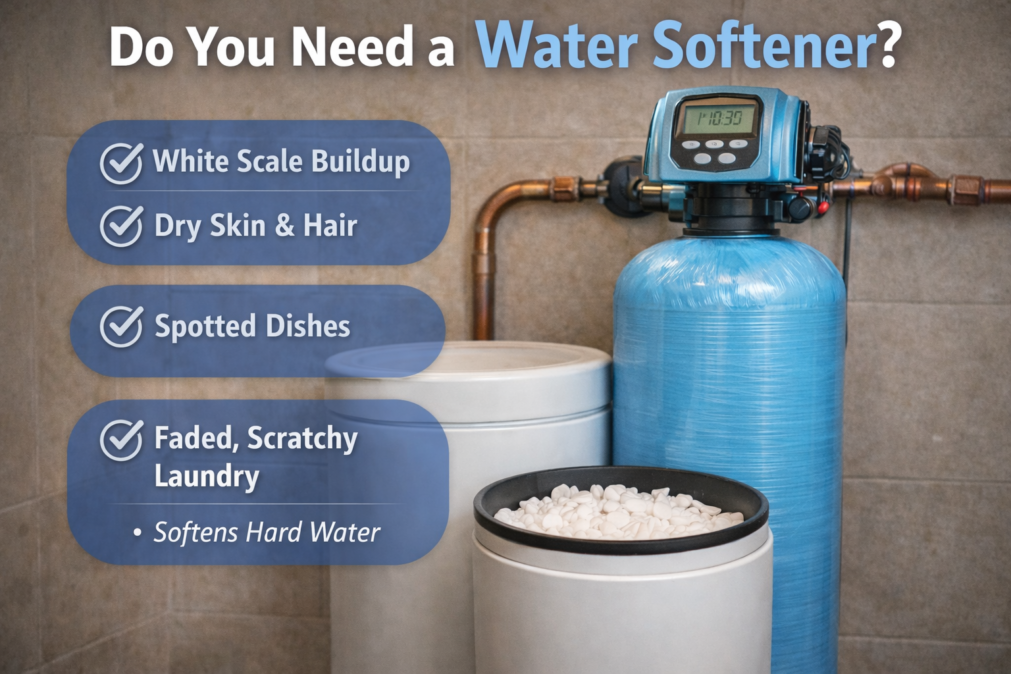
People often begin searching for a water softener after seeing the same problems again and again. A common sign is white or chalky crust around taps, shower heads, and tile grout. You might also notice water spots that seem impossible to wipe off, especially on glass and stainless steel. Soap may feel like it never rinses clean, leaving your skin dry or itchy and your hair dull or heavy. Laundry is another giveaway. Clothes can feel stiff, colors fade faster, and towels lose that soft feel even when you use fabric softener.
Appliances can suffer quietly in the background. Kettles, coffee machines, dishwashers, washing machines, and water heaters all work harder when scale builds up. In many homes, the water heater takes the biggest hit because heat speeds up scale formation. If your showers get lukewarm faster than they used to, or you hear popping noises from the heater, scale may be part of the story.
How a Water Softener Works in Plain Language
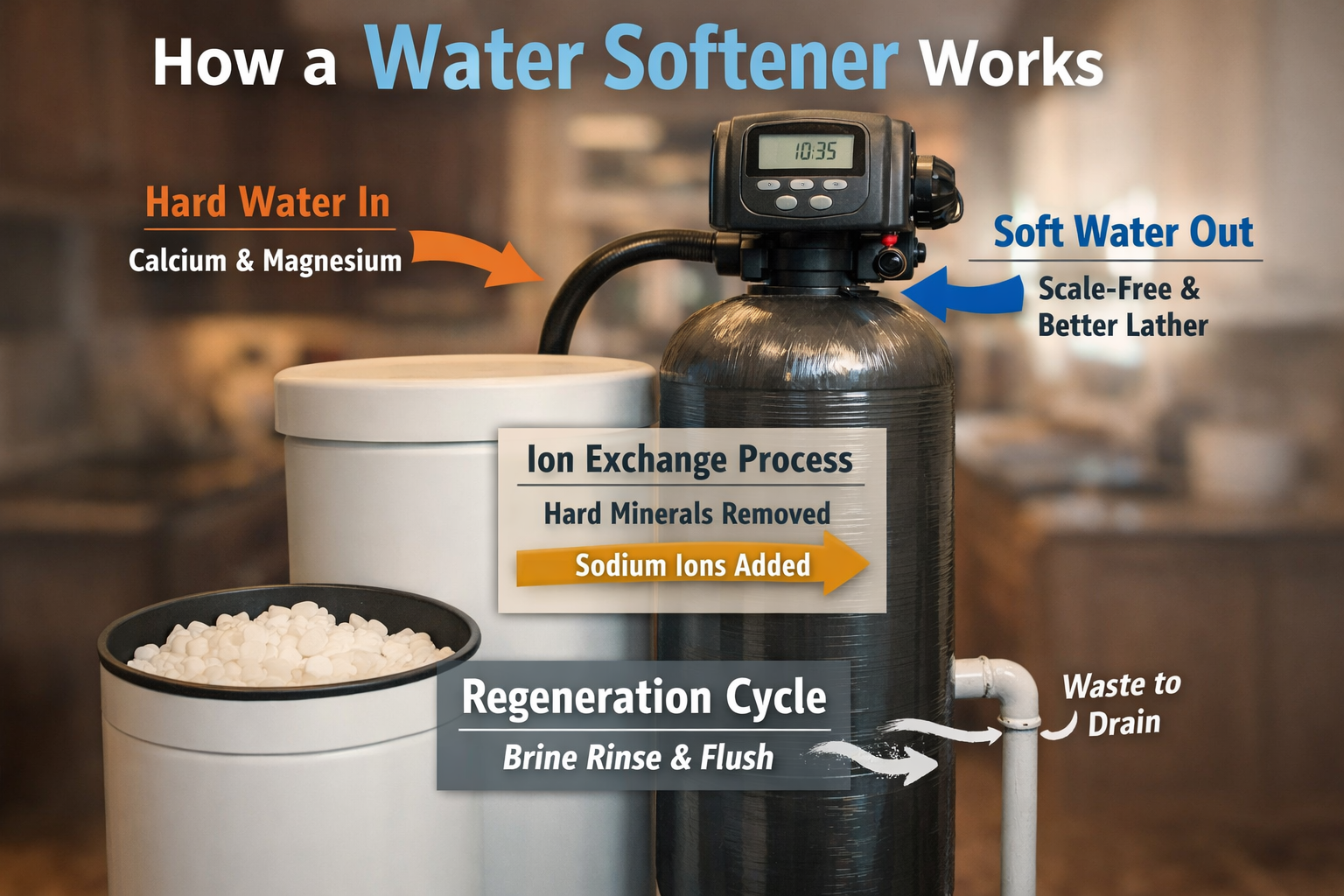
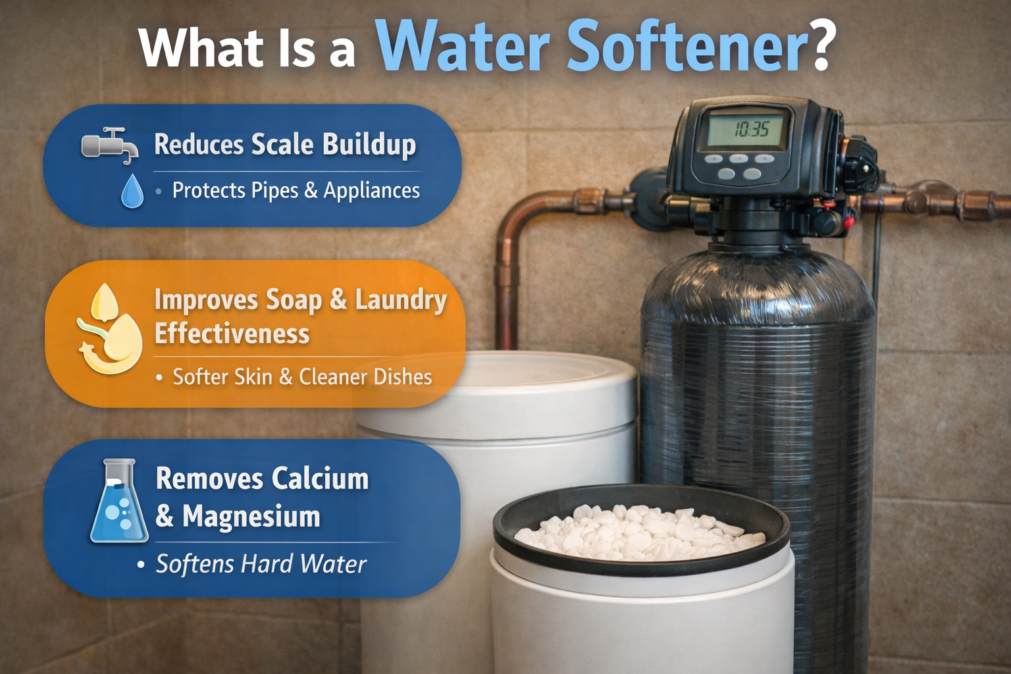
A water softener removes the minerals that cause hardness before the water runs through your home. The most common type uses a process called ion exchange. You don’t need to memorize the science to understand the idea: the system traps calcium and magnesium and replaces them with sodium or potassium. Inside the main tank are tiny resin beads. When hard water flows through the tank, calcium and magnesium stick to the resin, and the system releases sodium or potassium into the water instead. The result is water that behaves differently: it lathers better, leaves fewer deposits, and doesn’t create the same scale problem.
Over time, the resin beads fill up with hardness minerals and need to be refreshed. That refresh process is called regeneration. During regeneration, a salty brine solution rinses through the resin bed and pushes the trapped minerals out to a drain line. After that, the resin is ready to soften water again. This cycle repeats automatically, and the frequency depends on your water hardness and how much water your household uses.
Types of Water Softener Systems and What They’re Best For
Not all systems are built the same, and the best choice depends on what you want to solve.
Salt-based softening systems
This is the classic water softener and the one most homeowners choose when they want true soft water. It removes hardness minerals effectively and is reliable in a wide range of water conditions. It uses salt (or sometimes potassium) to regenerate the resin. If you want noticeable improvements in soap performance, scale reduction, and overall comfort, this type usually delivers the most obvious results.
Dual-tank systems
A dual-tank water softener uses two resin tanks so one can keep softening while the other regenerates. This is useful for large families, big homes, or places with extremely hard water. The main advantage is consistency. You’re less likely to notice a drop in soft water availability during heavy use.
Salt-free conditioners
These systems are often marketed in a way that sounds similar to softening, but they usually work differently. Many do not remove calcium and magnesium. Instead, they aim to reduce scale by changing how minerals form deposits. Some households like them because there’s no salt and less ongoing maintenance, but expectations matter. If your goal is the classic “soft water feel” and better lathering, a traditional water softener generally performs better.
Choosing the Right Size Without Guessing
Sizing is where many people go wrong. A water softener that’s too small may run out of capacity quickly, causing hard water symptoms to return sooner than expected. A system that’s too large might regenerate less efficiently, wasting salt and water. The right size depends on two things: hardness level and water usage.
Hardness is measured in grains per gallon or parts per million. If you have city water, your local water report may include hardness data. If you have well water, testing is even more important because water chemistry can vary, and you might also have iron or sediment that affects performance. Water usage depends on household size and habits. A home with four people who do daily laundry and long showers uses more water than a home with the same number of people who travel often or use water-saving fixtures.
When these numbers are matched correctly, the system regenerates at a reasonable pace. That balance is the sweet spot: consistent soft water without excessive salt use.
Where a Water Softener Should Be Installed
Most homes install the unit where the main water line enters the house, so all indoor water is treated. This whole-house setup protects appliances and plumbing, not just one faucet. A typical installation includes a bypass valve (so you can turn off the system when needed), a connection to a drain for regeneration discharge, and a place for the brine tank that’s easy to access for refilling salt.
Some homeowners prefer to keep outdoor taps on hard water to avoid wasting softened water on gardens or car washing. That’s a practical choice and often easy to set up during installation. If plumbing is complicated or space is tight, professional installation can prevent headaches later. What matters most is that the system is installed safely, properly sealed, and programmed correctly for your water conditions.
Maintenance That Keeps It Running Smoothly
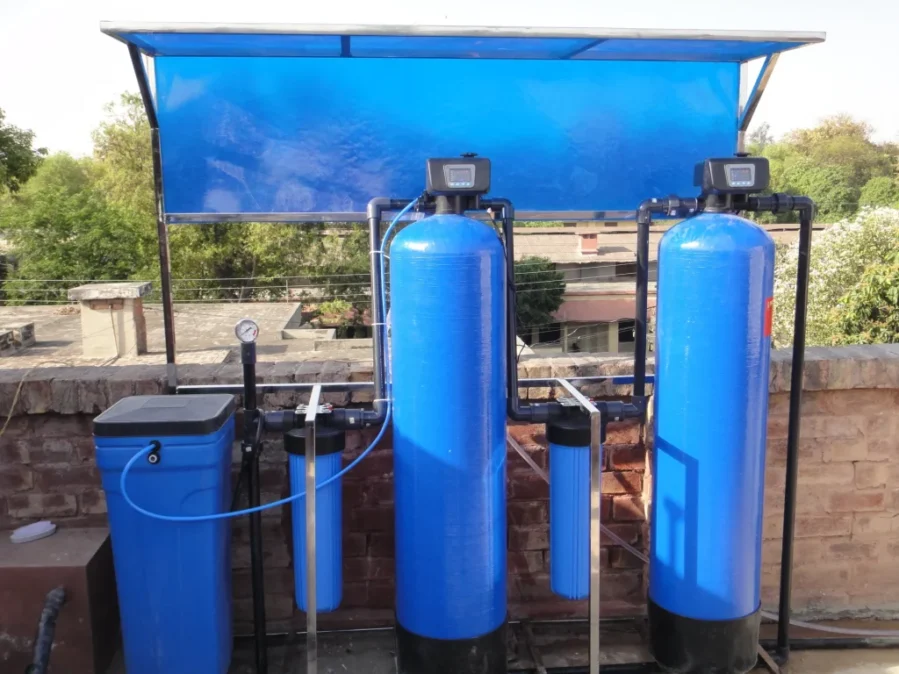
A water softener doesn’t require constant attention, but it does need a little care. The most regular task is checking the salt level in the brine tank. You don’t have to fill it to the top, but you should avoid letting it drop too low. It’s also smart to watch for salt bridging, which is when salt forms a hard crust and creates an empty space below it. When that happens, the brine may not form properly and the unit can’t regenerate effectively. If you suddenly notice scale returning or soap not lathering like it did last month, checking for a salt bridge is a good first step.
Cleaning the brine tank once in a while helps prevent sludge buildup. If your water contains iron, resin beads may need occasional cleaning with a resin-safe cleaner to keep performance strong. Most systems also have settings that can be adjusted as your household changes. If your family grows, if you move to a different home, or if water conditions shift, a quick reprogram can keep everything efficient.
What Changes You’ll Actually Notice
Some improvements are obvious, and some are quiet but valuable. With softened water, soap and shampoo tend to lather faster, and many people find they need less product. Bathrooms often become easier to clean because soap scum and mineral deposits don’t cling as stubbornly. Glass can look clearer, and fixtures stay shiny longer.
Laundry often improves too. Clothes can feel softer, towels may regain that plush feel, and whites can look brighter because minerals aren’t embedding into fabric fibers as much. Appliances also benefit. Reduced scale can help water heaters run more efficiently and may extend the life of dishwashers, washing machines, and small kitchen devices. You might not notice that benefit in a single day, but over months and years it can mean fewer repairs and replacements.
Common Concerns People Have Before Buying
A frequent question is whether softened water is safe to drink. For most households, it is. A traditional system swaps hardness minerals for sodium or potassium, so sodium content can increase slightly. The exact amount depends on hardness level and how the system is configured. If sodium intake is a concern, some homeowners use potassium instead of salt, or they keep one unsoftened cold-water line for drinking and cooking.
Another concern is cost. There’s the unit cost, installation, salt, and a little water used during regeneration. But it’s worth weighing that against the hidden cost of hard water: appliance wear, extra cleaning supplies, inefficient heating, and plumbing issues. For many households, the math starts to make sense once they see how much time and money hard water quietly eats up.
Lastly, people worry about complexity. In reality, once a water softener is sized properly and programmed correctly, daily life doesn’t change much. You refill salt occasionally and enjoy cleaner results without scrubbing as hard.
Conclusion
Hard water can make a home feel harder to manage than it should be. The right water softener reduces the minerals that cause scale and soap problems, helping your plumbing, appliances, and cleaning routines all at once. The key is choosing a system that fits your water hardness and household demand, installing it correctly, and keeping up with simple maintenance. When those pieces come together, you’re not just fixing spots on glassware—you’re making water work better in your entire home.
FAQs
How do I know if I need a water softener?
Look for scale buildup, water spots, stiff laundry, and soaps that don’t lather well. A quick water hardness test can confirm it.
Does a water softener improve skin and hair feel?
Many people notice less dryness and a cleaner rinse because soap works better. Results vary, but the change is often noticeable.
How often do I need to add salt?
It depends on water hardness and usage, but many homes refill every few weeks. Checking monthly is a good habit.
Can a water softener help my water heater last longer?
Yes, reducing scale helps heating elements stay cleaner and work more efficiently. Over time, that can reduce strain and wear.
What’s the difference between a water softener and a conditioner?
A water softener removes hardness minerals, while many conditioners try to reduce scale without removing minerals. If you want true soft water, removal matters.
You May Also Read: Nigel Farage’s Wealth Explained: Income, Assets, and What We Actually Know