











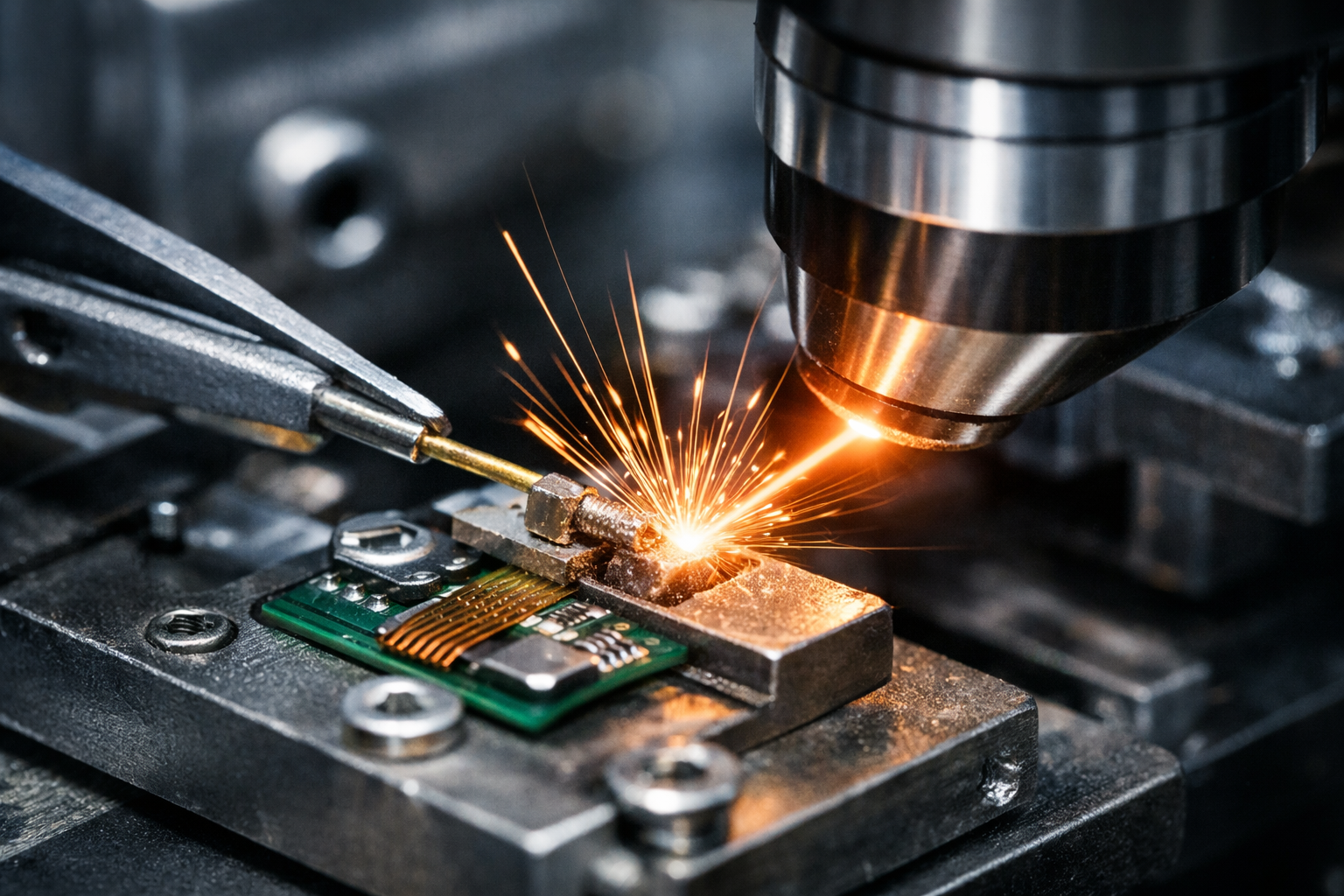
Micro Weld: The Complete Practical Guide for Small, Strong, Clean Joints
When parts get small, welding stops being about brute heat and starts being about control. A tiny connector tab, a thin foil strip, a miniature sensor housing, or a delicate medical component can be ruined by the same approach that works perfectly on thicker metal. That’s why micro welding exists. It’s a set of techniques designed to join very small parts with minimal distortion, tight repeatability, and clean results. In real workshops and production lines, a micro weld is often the hidden step that turns fragile assemblies into reliable products that survive vibration, handling, temperature swings, and daily use.
This guide breaks down micro welding in a practical way: what it means, where it’s used, the main processes, the materials that behave well (and the ones that fight back), the defects that show up most often, and how to choose a method that makes sense for your job. If you’re researching manufacturing, quality, repair work, or just trying to understand how small metal parts are joined, you’ll find clear explanations and useful details here.
What a Micro Weld Really Means
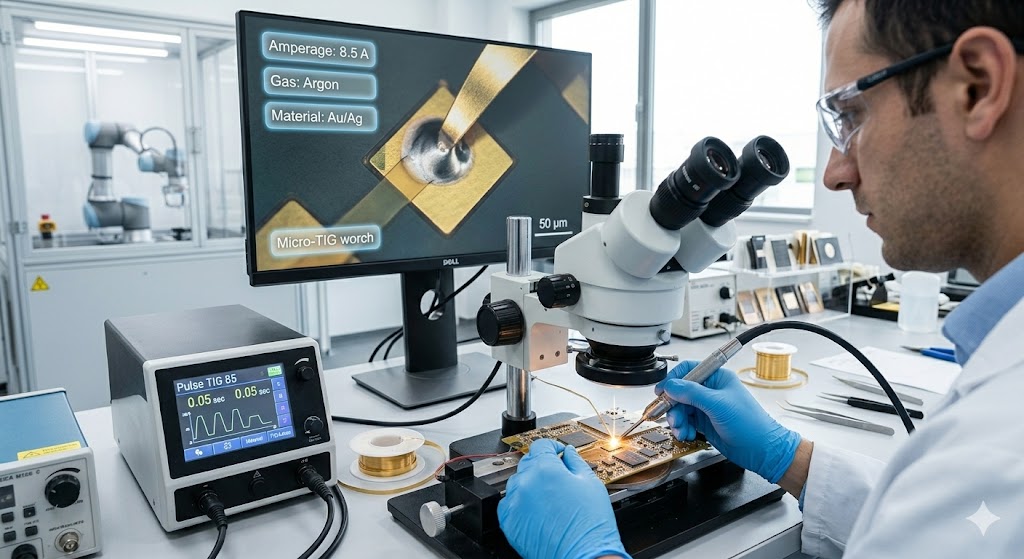
A micro weld is a weld made on small-scale components where precision matters more than raw penetration. The joint area may be tiny, the surrounding part may be heat-sensitive, and the tolerances may be unforgiving. In many cases, the weld is not only holding two pieces together; it’s also carrying electrical current, sealing a cavity, or maintaining alignment so the final assembly works correctly.
Micro welding also tends to involve controlled energy delivery. Instead of long, steady heat, many micro processes use short pulses, focused spots, or carefully timed current flow. The goal is to create fusion at the joint while keeping heat spread low. That’s why micro welding is often paired with magnification, stable fixturing, and repeatable parameter settings. At this scale, a small change in pressure, surface cleanliness, or part fit-up can make the difference between a strong joint and a weak one.
Why Micro Weld Quality Matters More Than People Expect
Small welds may look simple, but they can be high-risk if they fail. A loose tab in a battery pack can create resistance, heat, and long-term reliability problems. A weak joint in a sensor can break under vibration or thermal cycling. A tiny medical component can’t afford cracks, contamination, or inconsistent fusion. Micro welding is used in these settings because it reduces distortion and protects nearby features, but it only works when the process is stable.
The best micro weld work is designed for consistency. That means repeatable inputs, predictable outputs, and inspection methods that match the application. In production, consistency protects yield and reduces rework. In repair or prototyping, consistency protects expensive parts and saves time. The smaller the components, the less room there is for “close enough.”
Where Micro Welding Is Used
Micro welding shows up in more places than most people realize. Battery manufacturing is a major example because tabs, busbars, and connectors are often thin and conductive. Electronics also rely heavily on micro welding for leads, terminals, micro housings, and fine contact points. Sensors and instrumentation use tiny welds to maintain stable electrical signals and mechanical strength. Medical devices use micro welding to join small stainless steel or titanium parts, especially where alignment and cleanliness matter. Precision repair and jewelry work use micro welding methods when the job calls for minimal heat spread and localized work.
In each case, the goal is similar: create a strong joint without damaging what’s nearby. That’s the reason micro weld methods are chosen even when other joining methods exist.
Micro Weld Processes You’ll See Most Often
Micro resistance welding
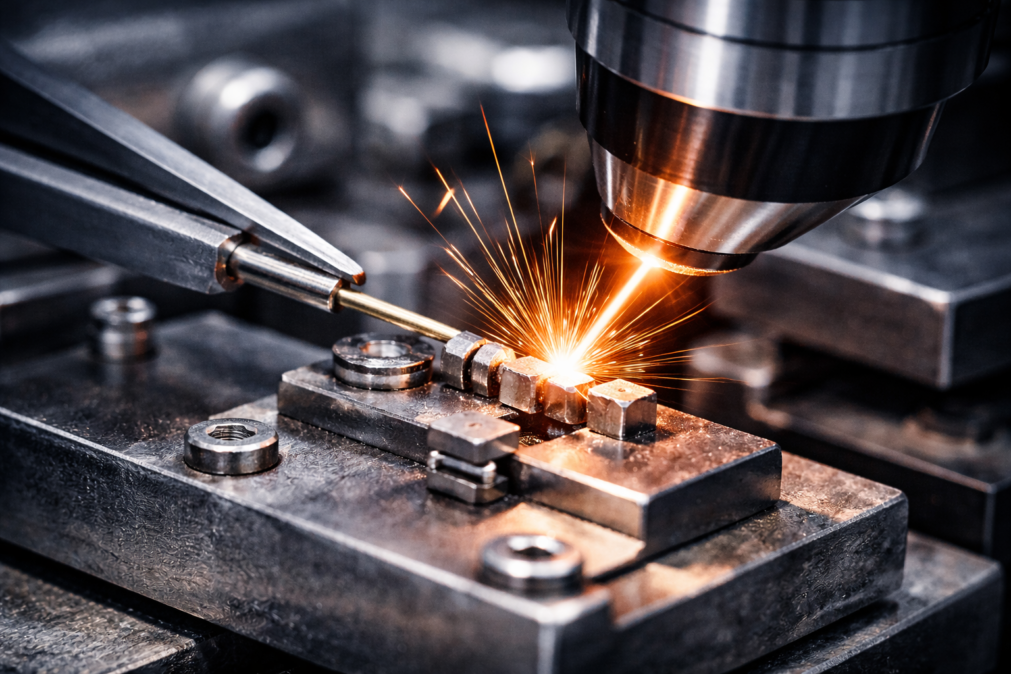
Micro resistance welding uses electrical current plus pressure to generate heat right at the interface between two parts. Because the heat is created inside the joint region, it can be very efficient for small overlaps like tabs, foils, and wires. This process is known for speed and repeatability, especially when paired with good fixturing and consistent surface conditions.
The biggest advantage is production-friendly consistency. Once parameters are dialed in, the process can run quickly with stable results. The biggest challenge is that electrodes matter a lot. Electrode wear changes contact area and current flow, which changes heat at the weld. Contamination on electrodes or parts can also cause erratic results. For reliable micro weld output, electrode maintenance, cleaning routines, and monitoring are part of the process, not an afterthought.
Laser micro welding
Laser micro welding focuses energy into a small spot and can be configured for short pulses or continuous operation depending on the goal. It’s often used when access is tight, parts are delicate, or the weld must be placed very precisely. Laser welding can also create narrow seams and controlled penetration when parameters are tuned correctly.
This method is popular in electronics, sensors, and medical components because it can limit distortion and keep the heat-affected area small. It also works well when the joint geometry is consistent and can be fixtured reliably. Laser systems do require careful setup: focus position, beam quality, shielding, and surface condition all influence results. When done properly, a micro weld made by laser can look clean and uniform, with minimal post-weld cleanup.
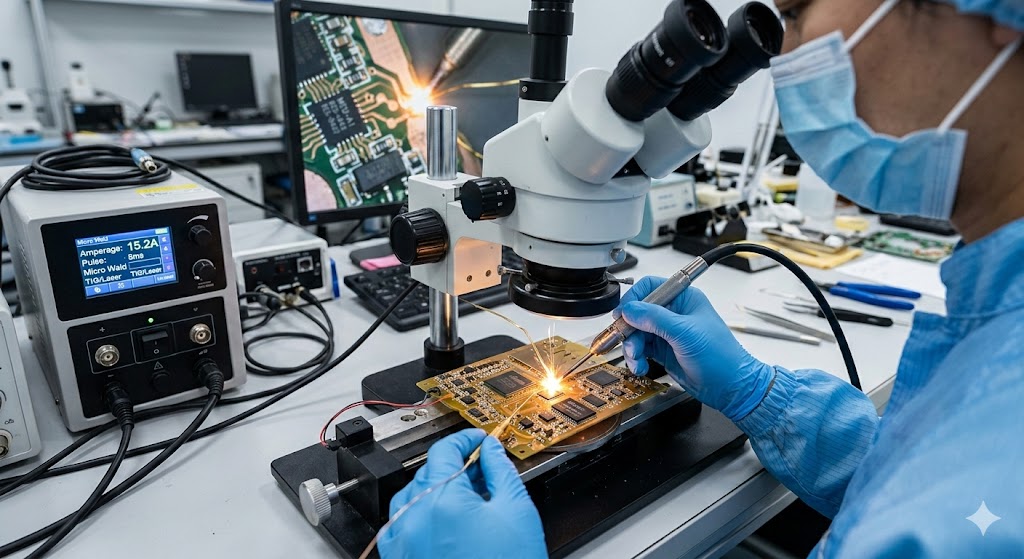
Micro TIG and pulse-arc systems
Micro TIG and pulse-arc systems are common in repair work, small-batch fabrication, and precision jobs where a skilled operator can make real-time adjustments. These systems deliver controlled energy in pulses, which helps keep heat localized. They can be very effective for small parts, delicate repairs, and detailed work where the operator needs flexibility.
The trade-off is operator dependence. With hand-guided work, technique affects consistency. For production environments that need identical welds across large volumes, automated processes often win. For specialized jobs and repairs, micro TIG or pulse-arc can be a practical and capable choice for micro weld applications.
Materials and How They Behave at Small Scale
Micro welding performance depends heavily on the metal and the geometry. Stainless steel is widely used because it’s strong and corrosion resistant, but it can discolor and distort if heat input is excessive. Nickel and nickel alloys are common in electrical applications, including battery-related work. Copper is highly conductive, which makes it challenging because it pulls heat away from the weld zone; it may require higher energy or different settings to achieve consistent fusion. Aluminum is lightweight and common in batteries and electronics, but its oxide layer can interfere with bonding if surface preparation is weak. Titanium is prized in medical and high-performance applications but is sensitive to contamination and often needs excellent shielding to avoid brittle weld regions.
Thickness is equally important. Thin foils and fine wires react quickly to heat. Even slight over-energy can cause burn-through, undercut, or distortion. That’s why micro weld parameter development should use test pieces that match real thickness and joint design instead of generic samples.
Joint Design and Fit-Up: The Quiet Success Factor
At micro scale, joint design can either make welding easy or make it frustrating. Good fit-up improves heat flow consistency and supports predictable fusion. Poor fit-up creates gaps, uneven contact, and unstable weld pools. That leads to variable penetration and unexpected defects.
Overlap joints are common in tabs and foils, but they require stable pressure and clean surfaces. Butt joints can work but demand precise alignment and consistent edges. Tiny fillets may require careful energy control and shielding. In all cases, fixturing matters. A stable fixture reduces movement, keeps the joint consistent, and improves repeatability. For production, a strong fixture is often the difference between a stable micro weld process and constant troubleshooting.
Micro Weld Quality: What to Measure and What to Watch
A weld that looks “fine” can still fail if quality checks are not matched to the application. Strength is often checked with pull tests or shear tests, depending on the joint style. In electrical applications, resistance measurement can be critical because poor electrical contact can cause heat buildup and long-term degradation. Penetration control matters too: too shallow and the joint is weak; too deep and thin parts can be compromised.
Heat-affected zone control is another key factor. Excess heat can change material properties, soften thin structures, or warp nearby features. For micro components, even small distortion can cause assembly problems later. Visual inspection under magnification is common, but many operations also use cross-sections during development to confirm fusion and penetration. The goal is to confirm the process is stable, then use the lightest inspection plan that still protects quality.
Common Defects and Practical Prevention
Porosity often comes from contamination, trapped gases, or surface oxidation. The best defense is surface cleaning, proper shielding where needed, and stable parameters. Cracking can appear in certain materials or when the joint cools too quickly; reducing stress, improving joint design, and controlling heat input can help. Burn-through is common in thin foils when energy is too high or the spot is too concentrated; lower energy, shorter pulses, or slightly larger spot sizes are common fixes. Weak fusion can result from low energy, poor contact pressure, or oxides; improving fit-up and preparation usually provides a big improvement.
In many micro weld problems, the issue is not the machine. It’s the combination of surface condition, fixture stability, electrode or optics condition, and parameter drift. Fixing one part of the chain while ignoring the others often leads to temporary improvement and then the same issue returns.
How to Choose the Right Micro Weld Method
The best method depends on what you’re joining and what you need the joint to do. If speed and repeatability matter for small overlaps like tabs and wires, micro resistance welding is often strong. If precision placement, minimal distortion, or fine seam control is the priority, laser micro welding is a common choice. If the work is specialized, repair-focused, or low volume with varying geometries, micro TIG or pulse-arc can offer flexibility.
Also consider your inspection and validation needs. If the joint carries current, electrical testing may be essential. If the part must remain perfectly aligned, dimensional checks should be part of the process. If the application is safety-critical, procedure control and documentation become more important. A micro weld method is not just a tool; it’s a system that includes fixturing, cleaning, monitoring, and quality verification.
Best Practices for Consistent Results
Start with surface preparation. Oils, fingerprints, oxide layers, and residue cause inconsistency and defects. Use stable fixturing that holds the joint the same way every time. Develop parameters with realistic samples that match your actual materials and thicknesses. Maintain electrodes, optics, and shielding equipment on a schedule. Use monitoring where practical, especially in production, to catch drift before it becomes scrap. Finally, document the procedure so results can be repeated by different operators and across different shifts.
When the basics are handled well, micro weld quality improves quickly. When the basics are ignored, even expensive equipment can struggle.
Conclusion
Micro welding is precision work that rewards discipline. A micro weld can join delicate parts with strength, electrical reliability, and minimal distortion, which is why it plays a central role in batteries, electronics, sensors, medical devices, and precision repairs. The key to good results is understanding the process options, matching them to the material and joint design, and controlling the small details: surface prep, fit-up, parameter stability, and inspection. With the right approach, micro welding becomes less of a mystery and more of a reliable, repeatable manufacturing step that protects product quality.
FAQs
What is a micro weld used for?
A micro weld is used to join tiny parts where heat must be controlled tightly. It’s common in batteries, electronics, sensors, medical devices, and precision repair work.
Which micro welding method is best for battery tabs?
Many battery tabs are joined with resistance welding or laser welding. The best choice depends on the tab material, thickness, and the required electrical performance.
Why do micro welds fail even when they look good?
A weld can look clean but still have weak fusion, porosity, or high electrical resistance. Testing and stable process control help catch these hidden problems.
What causes burn-through in micro welding?
Burn-through usually comes from too much energy, poor heat control, or thin material. Adjusting pulse settings, spot size, and fixturing often solves it.
How can micro welding be made more consistent in production?
Consistency improves with clean surfaces, strong fixturing, stable parameters, regular maintenance, and inspections that confirm strength and electrical reliability.
You May Also Read: Lace Tank Tops for Layering: The Effortless Way to Elevate Everyday Outfits