











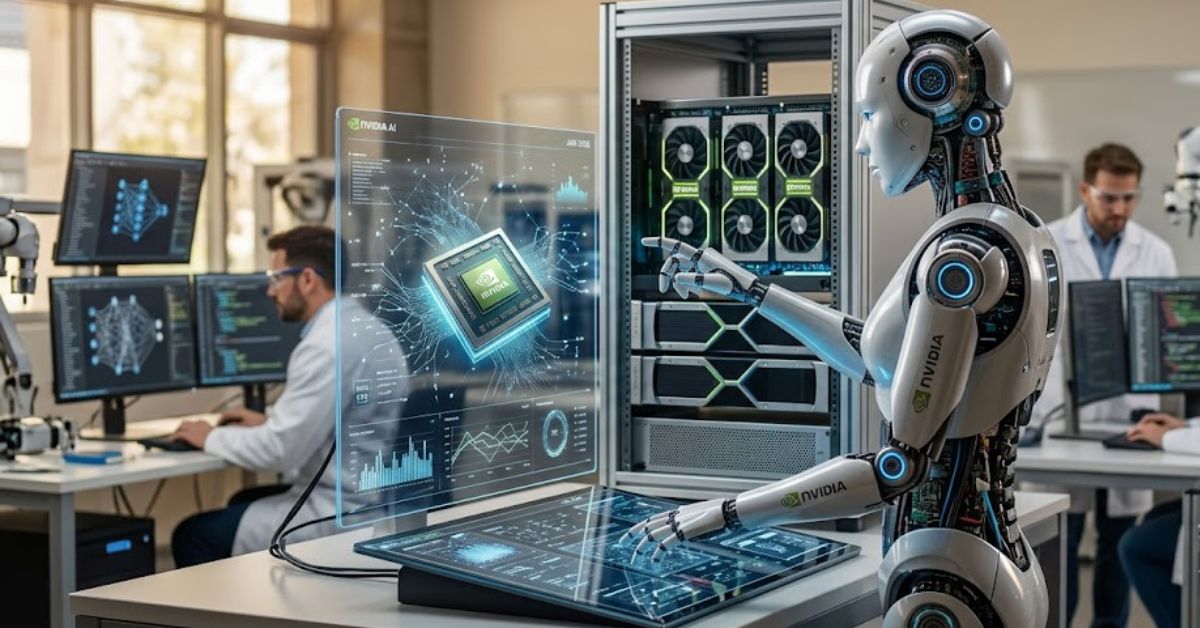
NVIDIA News January 2026: Biggest AI, Robotics, and GPU Announcements You Should Know
NVIDIA started 2026 with several major announcements that reinforced its position in artificial intelligence, robotics, and accelerated computing. If you follow AI technology or work in software development, cloud computing, or enterprise IT, understanding nvidia news january 2026 helps explain where the industry is heading.
From new AI platforms to robotics innovations, the company focused on building technologies that support the next generation of intelligent applications. This article covers the most important updates and explains why they matter to businesses, developers, and everyday technology users.
Why NVIDIA’s January 2026 Announcements Matter
The biggest takeaway from nvidia news january 2026 is that NVIDIA is expanding beyond graphics processing units. Its latest products and software show a broader strategy centered on complete AI ecosystems.
Instead of offering only hardware, the company now provides processors, networking, software frameworks, simulation platforms, and AI models designed to work together. This integrated approach makes it easier for organizations to build and deploy advanced AI systems at scale.
CES 2026 Was the Center of Attention
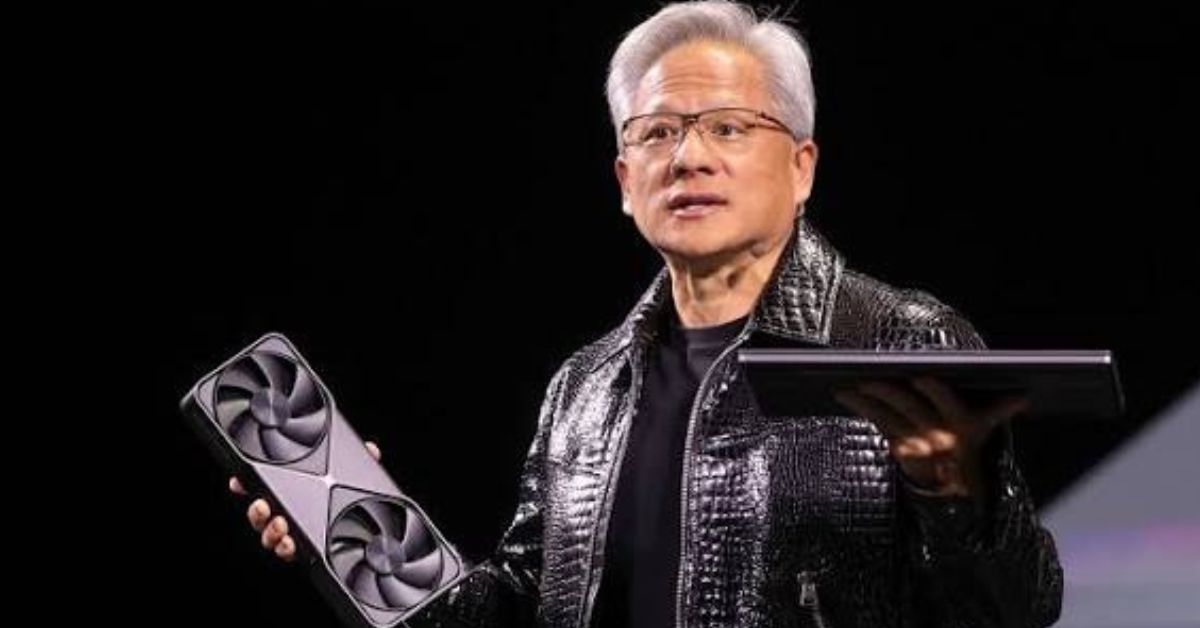
Most of the important nvidia news january 2026 came from the company’s CES keynote in Las Vegas. CEO Jensen Huang introduced new technologies that highlighted the growing role of AI across industries.
The keynote focused on several major themes:
- AI infrastructure
- Robotics
- Physical AI
- Enterprise computing
- Autonomous driving
- Developer platforms
- High-performance networking
These announcements reflected NVIDIA’s long-term vision of powering future AI applications through both hardware and software.
Vera Rubin Becomes the Next AI Computing Platform
One of the biggest announcements was the Vera Rubin platform, designed as the successor to the Blackwell architecture.
The platform combines a new CPU with an advanced GPU to deliver greater performance for AI training and inference. It also includes upgraded networking technology that allows large data centers to connect thousands of processors more efficiently.
For organizations building large language models or running complex AI workloads, Vera Rubin promises faster performance while improving energy efficiency and scalability.
DGX Spark Makes Local AI Development Easier
Another highlight in nvidia news january 2026 was the expansion of DGX Spark.
The system gives developers a compact AI workstation capable of running large AI models without depending entirely on cloud services. Local development improves testing speed, protects sensitive data, and reduces cloud costs during experimentation.
For startups, researchers, and software engineers, this provides a practical way to build and refine AI applications before deploying them in production environments.
Physical AI Takes Center Stage
NVIDIA introduced Physical AI as one of its key priorities for the future.
Unlike traditional AI that mainly processes text or images, Physical AI allows machines to understand and interact with real-world environments. This technology supports robots that can move safely, recognize objects, and complete practical tasks with greater accuracy.
Manufacturing, logistics, healthcare, and warehouse automation are expected to benefit significantly from these advancements.
Robotics Continues to Grow
Robotics received considerable attention throughout the January announcements.
NVIDIA expanded its robotics ecosystem by improving training tools, simulation environments, and AI models that help robots learn more efficiently. Instead of relying only on real-world testing, developers can train robots inside realistic virtual environments before deployment.
This approach lowers costs, improves safety, and shortens development time for companies building industrial robots.
Isaac GR00T Supports Smarter Humanoid Robots
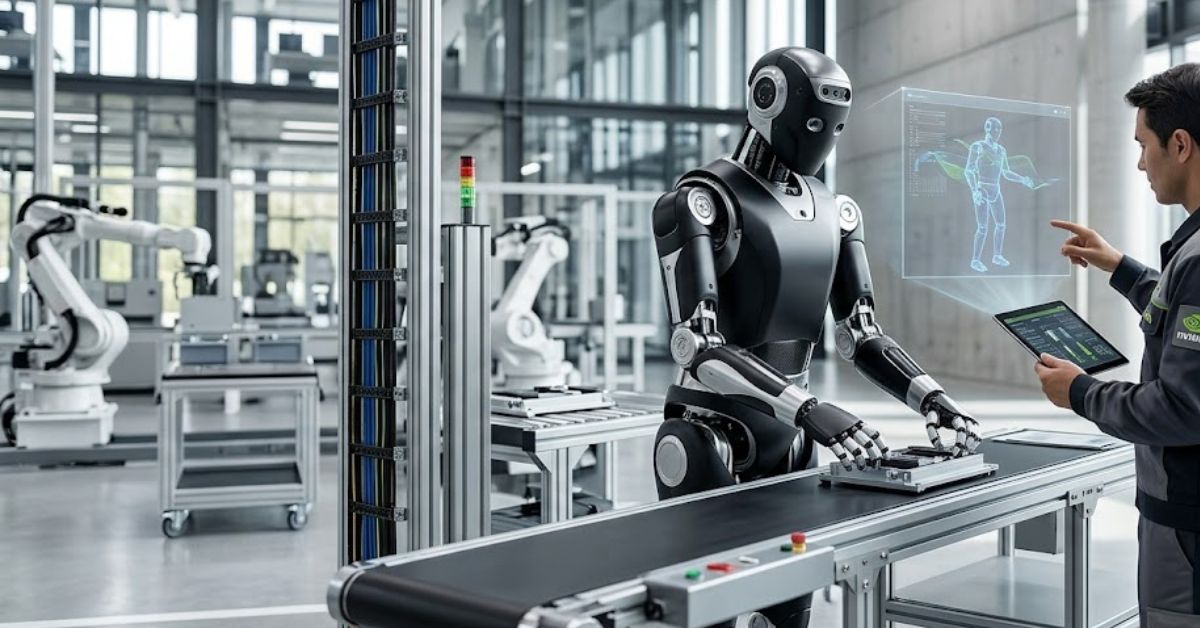
Another important part of nvidia news january 2026 was continued development of Isaac GR00T.
The platform helps developers create humanoid robots capable of understanding instructions, recognizing surroundings, and performing useful physical tasks.
Rather than programming every movement individually, developers can train robots using AI models that improve over time through learning and simulation.
This technology has potential applications in manufacturing, healthcare, retail, and service industries.
Cosmos Improves AI Simulation
Cosmos is another technology receiving attention during NVIDIA’s January updates.
Its purpose is to generate realistic virtual environments where AI systems can learn safely before entering the real world.
For example, autonomous vehicles can practice difficult driving situations without putting people at risk. Robots can also learn how to navigate factories or warehouses using synthetic environments that closely resemble real locations.
Simulation like this helps reduce development costs while improving system reliability.
AI Infrastructure Remains a Major Focus
Modern AI requires enormous computing power.
NVIDIA responded by expanding its AI infrastructure strategy, combining GPUs, CPUs, networking equipment, and software into unified platforms designed for enterprise-scale deployment.
These integrated systems allow businesses to train larger AI models, process more information, and support growing numbers of AI applications without rebuilding their infrastructure from scratch.
Enterprise AI Becomes More Practical
Businesses are looking for reliable ways to deploy AI beyond research projects.
NVIDIA’s latest software improvements simplify enterprise AI by providing optimized development tools, faster inference performance, and better integration with existing data center environments.
This makes AI adoption more practical for industries such as finance, healthcare, manufacturing, retail, and telecommunications.
Autonomous Driving Receives New AI Capabilities
Self-driving technology remains one of NVIDIA’s strategic priorities.
The company introduced additional AI models and simulation tools designed to improve vehicle perception, decision-making, and safety testing. Developers can train autonomous driving systems using realistic virtual scenarios before testing on public roads.
This process supports safer and more efficient development while reducing testing costs.
What These Announcements Mean for Developers

Developers benefit from faster hardware, better AI software, and improved development environments.
The January announcements provide tools that simplify AI model training, optimize deployment, and reduce the complexity of building intelligent applications. Whether creating chatbots, robotics software, or enterprise AI solutions, developers now have more efficient resources available.
What Businesses Should Expect
Businesses investing in AI should view these announcements as part of a long-term industry shift rather than isolated product launches.
Organizations increasingly need computing platforms capable of handling AI workloads securely and efficiently. NVIDIA’s expanding ecosystem gives companies multiple options for building scalable AI infrastructure while supporting future growth.
The technologies introduced during nvidia news january 2026 demonstrate that AI is becoming a core business capability instead of an experimental technology.
The Future After January 2026
The direction presented in nvidia news january 2026 suggests NVIDIA will continue expanding across multiple AI sectors instead of focusing only on graphics hardware.
Future developments will likely include more powerful computing platforms, smarter robotics, improved simulation technologies, and stronger enterprise AI solutions. These innovations are expected to influence cloud computing, healthcare, transportation, manufacturing, education, and scientific research over the coming years.
Conclusion
The announcements covered in nvidia news january 2026 reveal a company focused on building complete AI ecosystems rather than individual products. From the Vera Rubin platform and DGX Spark to robotics, Physical AI, and enterprise infrastructure, NVIDIA demonstrated how hardware and software can work together to solve increasingly complex problems.
For developers, businesses, and technology enthusiasts, these updates offer valuable insight into the future of artificial intelligence. As AI adoption continues to grow worldwide, NVIDIA’s January 2026 announcements will likely shape innovation across many industries for years to come.
FAQs
What was the biggest announcement in NVIDIA news January 2026?
The Vera Rubin AI computing platform was among the biggest announcements, showcasing NVIDIA’s next generation of AI infrastructure.
What is DGX Spark used for?
DGX Spark is designed for local AI development, allowing developers to build and test large AI models more efficiently.
Why is Physical AI important?
Physical AI enables robots and machines to understand and interact with real-world environments, expanding automation across industries.
Did NVIDIA announce new robotics technology?
Yes. NVIDIA continued expanding its robotics ecosystem with Isaac GR00T and advanced simulation tools for smarter robot training.
Why should businesses follow NVIDIA’s January 2026 updates?
The announcements provide insight into future AI infrastructure, enterprise computing, robotics, and technologies that many organizations are expected to adopt.