










Hit the Button: A Fun Way to Build Mental Maths Skills
Learning maths doesn’t have to feel like a chore. Interactive educational games have transformed the way children practice essential skills, and Hit the Button is one of the most popular examples. Designed for primary school learners, this fast-paced maths game helps children improve their recall of number facts through engaging, timed challenges.
Whether you’re a parent looking for a fun homework resource, a teacher searching for classroom activities, or a student wanting to become more confident with times tables, this guide explains everything you need to know about Hit the Button, including how it works, its benefits, and the best ways to use it effectively.
What Is Hit the Button?
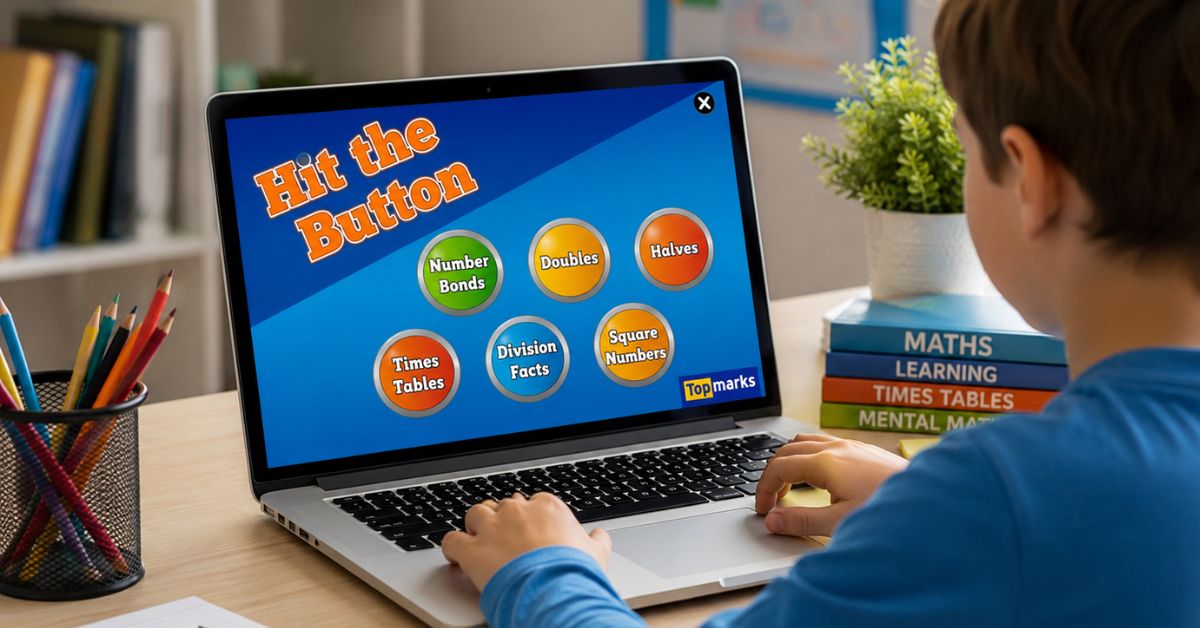
Hit the Button is an online mental maths game created by Topmarks, a trusted provider of educational resources for schools. The game helps children strengthen their understanding of basic arithmetic by encouraging quick recall rather than lengthy calculations.
Instead of solving complex maths problems, players answer a series of simple questions as quickly and accurately as possible before the timer runs out. This repeated practice helps improve confidence, speed, and accuracy.
The game is widely used in UK primary schools but is equally useful for learners in other countries who want to practice basic maths skills.
How Hit the Button Works
The game is designed to be simple enough for young learners while remaining challenging as skills improve.
Here’s how it works:
- Choose a maths topic, such as multiplication or number bonds.
- Select the difficulty level or specific number set.
- Answer each question before time runs out.
- Earn points for correct answers.
- Try to beat your previous high score.
Because the questions appear in random order, every session feels slightly different, making repeated practice more engaging.
Topics You Can Practice
One of the reasons Hit the Button remains popular is the variety of maths topics available.
Times Tables
Children can practice multiplication facts from beginner levels through more advanced tables. Regular repetition helps improve recall and prepares students for classroom assessments.
Division Facts
Understanding multiplication and division together strengthens overall number sense. The game encourages children to recognise these relationships quickly.
Number Bonds
Number bonds are an essential building block for mental arithmetic. Children practice combinations that make numbers such as 10, 20, or 100.
Doubles and Halves
These exercises improve mental calculation and help children solve everyday maths problems more efficiently.
Square Numbers
Older primary school students can also practice recognising common square numbers, supporting more advanced mathematical learning.
Why Teachers and Parents Recommend It
Many educational resources become popular because they are entertaining. Hit the Button stands out because it combines enjoyment with meaningful learning.
Some of its biggest advantages include:
- Encourages regular practice without becoming boring.
- Improves mental calculation speed.
- Reinforces classroom learning.
- Requires very little setup.
- Suitable for independent learning.
- Provides immediate feedback after every answer.
- Motivates children through scores and rewards.
Teachers often use the game as a quick lesson starter, while parents find it useful for short homework sessions.
Key Features
Several features make the game effective for everyday learning.
Fast-Paced Challenges
Timed rounds encourage children to think quickly while remaining focused.
Child-Friendly Design
The interface is colourful, clear, and easy to navigate, even for younger learners.
Multiple Maths Categories
Children can practice different areas depending on their current school curriculum.
Replay Value
Randomly generated questions ensure that each session offers fresh practice.
Practice at Home or School
The browser version works well on computers and tablets, making it suitable for classrooms and home learning alike.
Benefits of Using Hit the Button
Consistent practice with mental maths offers long-term educational benefits.
Builds Confidence
Quick success encourages children to believe in their abilities, making maths feel less intimidating.
Improves Recall
Frequent repetition helps children remember important number facts without relying on counting methods.
Supports Classroom Learning
The game reinforces concepts already being taught in school, helping students retain what they learn.
Encourages Independent Study
Children can complete short practice sessions on their own without needing constant supervision.
Makes Learning Enjoyable
Gamification transforms repetitive practice into a fun activity, increasing motivation.
Are There Any Drawbacks?
Although Hit the Button is an excellent practice tool, it is not designed to replace maths lessons.
Some limitations include:
- It focuses on recalling facts rather than explaining mathematical concepts.
- Timed challenges may feel stressful for some children.
- It does not cover advanced maths topics.
- Children still benefit from teacher guidance and written problem-solving activities.
Using the game alongside traditional learning methods provides the best results.
Practical Tips for Getting Better Scores
Children can improve steadily with a few simple habits.
Practice Little and Often
Five to ten minutes each day is usually more effective than one long session each week.
Focus on Accuracy First
Correct answers are more important than rushing through questions.
Master One Skill at a Time
Become confident with one multiplication table before moving to another.
Review Mistakes
If certain questions keep appearing incorrectly, spend extra time practising those facts.
Celebrate Progress
Keeping track of high scores encourages children to continue improving.
Who Can Benefit from Hit the Button?
The game is suitable for a wide range of learners.
- Primary school pupils
- Parents supporting homework
- Teachers planning maths activities
- Tutors providing one-to-one lessons
- Homeschool families
- Children preparing for multiplication assessments
Even older students who want to refresh basic arithmetic skills can benefit from regular practice.
Alternatives to Hit the Button
If you’re looking for additional maths practice, these educational resources are also worth exploring:
- Topmarks learning activities
- NRICH Maths
- BBC Bitesize Maths
- Khan Academy Kids
- Times Tables Rock Stars
- White Rose Maths resources
Combining different resources can keep learning fresh and engaging.
FAQs
Is Hit the Button free?
Yes. The web version is available to use free of charge. A paid mobile app is also available for certain devices.
What age group is it designed for?
It is primarily intended for children aged 5 to 11, although anyone wanting to improve basic mental maths can use it.
Does it help with times tables?
Yes. Practising multiplication facts regularly is one of the game’s main purposes and can improve recall over time.
Can teachers use it in the classroom?
Absolutely. Many teachers use it for lesson starters, revision sessions, and independent practice activities.
Does the game explain maths concepts?
No. It focuses on practising facts quickly rather than teaching new mathematical methods, so it works best alongside classroom instruction.
Conclusion
Hit the Button has earned its reputation as one of the most effective free mental maths games for primary school learners. Its simple design, fast-paced challenges, and focus on essential arithmetic skills make it a valuable resource for both classrooms and home learning.
While it isn’t a complete maths curriculum, it excels at helping children build confidence, improve speed, and strengthen their recall of number facts. When combined with regular teaching and practical problem-solving activities, it can play an important role in developing strong mathematical foundations.
Whether your goal is mastering times tables, improving number bonds, or simply making maths practice more enjoyable, Hit the Button remains a trusted and effective learning tool.