











Syria Flag Explained: Colors, Stars, History, and What People Often Miss
If you’ve ever searched for the syria flag, you probably noticed something confusing right away: more than one version shows up. Some images have two stars, others have three, and the color order may look different depending on the source. That confusion isn’t your fault. Syria’s modern history has been shaped by major political shifts, regional movements, and changing state symbols, and the flag has changed along the way.
This article is written to be simple, detailed, and genuinely useful. You’ll learn what the syria flag looks like, why different versions exist, what the colors and stars are commonly understood to represent, and how to identify it correctly when you see it in photos, news clips, or classroom materials. By the end, you’ll have a clear picture of why a flag can carry so much weight, and why people care deeply about getting it right.
What the Syria Flag Looks Like at a Glance
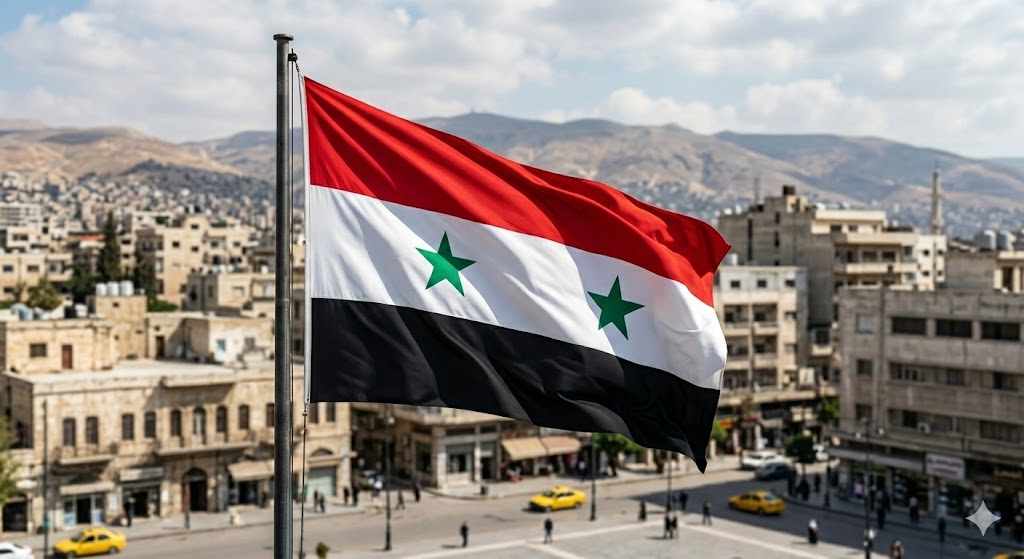
In its most familiar form to many readers, the syria flag is a horizontal tricolor: three equal stripes running left to right across the flag. The well-known state version for many years uses red on top, white in the middle, and black on the bottom, with stars placed in the center of the white stripe. The stars are usually green and arranged in a straight row.
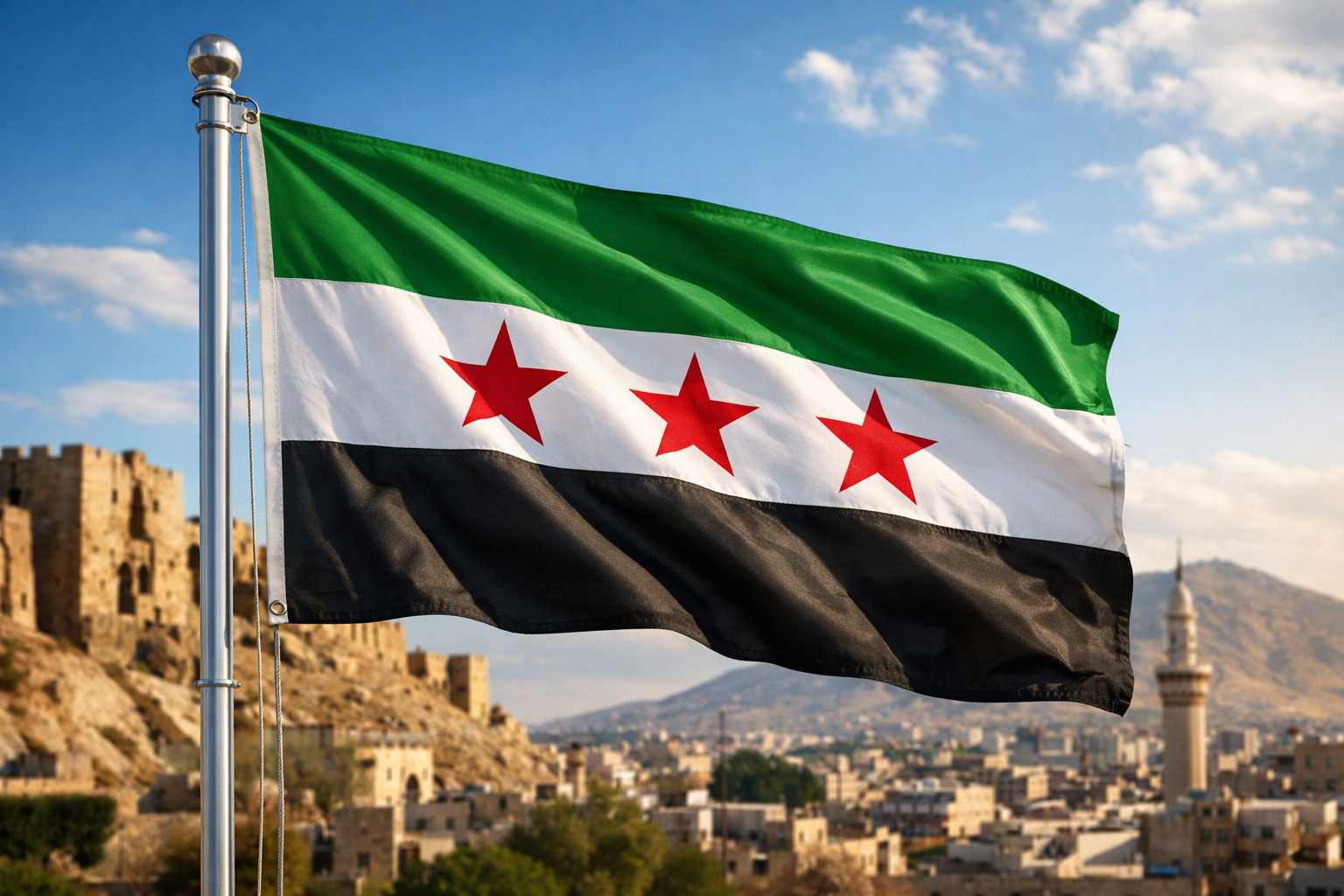
But it’s also common to see another design associated with Syria in public discussions: a tricolor using green, white, and black, with red stars in the center. Both designs are widely circulated, and both appear in real-world contexts depending on time period, politics, and the group using the flag.
If you’re trying to identify what you’re looking at, focus on three things:
- The order of the stripes
- The number of stars
- The color of the stars
Those details usually tell you which version you’re seeing.
Why There Are Different Versions
Flags don’t just represent geography. They represent authority, identity, and sometimes protest. When a country goes through major political change, national symbols can change too. Syria is a strong example of that. Over the decades, Syria has moved through different political phases, including independence-era identity, union projects with other Arab states, and later governments that adopted their own official symbols.
That history is why the syria flag is not a single unchanging image. Instead, it’s a symbol that has been revised, restored, and contested in different periods. For everyday readers, the easiest way to think about it is this: different flags often point to different chapters of Syrian political history.
Two Stars vs Three Stars: What People Usually Mean
The two-star version is commonly linked with Syria’s official state identity for a long stretch of modern history. Many textbooks, government materials, and older references show the red-white-black stripes with two green stars. For many people, this is the “default” syria flag because it was the one most often presented as the national flag for years.
The three-star version is often discussed in relation to independence-era symbolism and later political movements. You’ll see it in historical timelines and also in modern contexts where people use older symbols to express a message about legitimacy, change, or national direction.
It’s important to understand that online images often mix these contexts without explaining them. Search results can show a historical version labeled as “current,” or a modern political symbol presented without any time reference. That’s why it helps to read descriptions carefully and look at dates when they’re available.
A Practical Timeline: How the Flag Became What It Is
Syria’s flag history includes multiple designs, but the recurring theme is the tricolor style and the use of stars as political signals. In broad terms, Syria’s flags have often echoed regional colors and ideas shared across Arab history, while the stars have changed to reflect specific political moments.
In some eras, star counts were connected to union projects or political identity beyond Syria itself. In other eras, a different star arrangement was used to reflect national identity tied to independence and early statehood. Over time, certain versions became associated with particular governments, while other versions became symbols used by opposition movements or historical memory.
This is why two people can look at two different flags and both call them the syria flag—because in different moments of history, both were used as Syrian national symbols or widely recognized Syrian identifiers.
The Meaning of the Colors: Why Red, White, Black, and Green Appear So Often
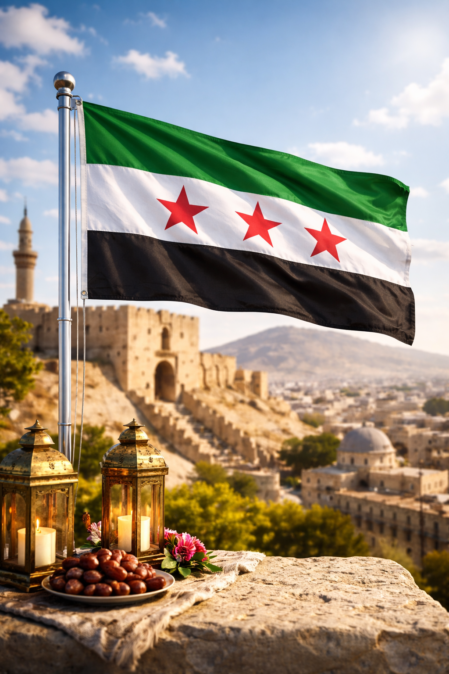
The syria flag uses colors that are widely seen across the Arab world. These colors are often linked to a shared historical and cultural palette. While exact interpretations can vary (and people sometimes attach their own meaning), there are common themes that show up again and again.
Red
Red is often seen as a color of struggle and sacrifice. In many national flags, red points to the cost of political change: conflict, resistance, and determination. It’s a bold color meant to stand out, and it tends to carry emotional weight.
White
White is commonly linked with peace and the hope for a stable future. It can also suggest a “clean page,” a wish for rebuilding after hardship, and a desire for unity rather than division.
Black
Black is often interpreted as a reference to historic eras and deep roots. It can also symbolize hardship or remembrance of difficult periods. In flags across the region, black frequently carries a sense of history that cannot be ignored.
Green
Green often points to heritage and identity, and it also has strong presence in cultural and religious history. When green appears in stars, it can represent ideals, unity, or a specific national message depending on the era.
The key takeaway is that the colors on the syria flag are not random. They connect Syria to a wider regional tradition while still serving as a national symbol shaped by Syrian history.
What the Stars Can Represent
Stars on flags usually carry direct meaning, and Syria’s stars have been used as a kind of political language.
In some periods, two stars have been associated with unity concepts or connections to broader regional projects. In other contexts, the two stars became a stable marker of state identity for Syria as recognized internationally for many years.
Three stars, often linked with earlier national symbolism, can represent a different chapter of history and a different story about what the flag is meant to say. For some people, three stars suggest a return to an earlier identity; for others, it represents a political position tied to more recent events.
Because star symbolism depends heavily on the historical moment, it’s best to treat star count as a clue to context. If you’re writing about the flag, mention the design clearly rather than assuming readers will know which version you mean.
How to Identify the Syria Flag Correctly in Photos and Videos
When you see flags in a crowded scene—especially in protests, sports events, or international meetings—details can blur. Here are quick ways to identify the syria flag without guessing:
- Look at the stripe order first. Red-white-black is one common arrangement; green-white-black is another.
- Count the stars. Two and three are the most commonly discussed counts.
- Check star color. Green stars and red stars are both seen, depending on the version.
- Watch for edits and filters. Online images are sometimes recolored or stylized, which can mislead you.
If you’re using the flag in a blog post, image captioning helps a lot. A simple description like “horizontal tricolor with two green stars” is clear and prevents confusion.
Design Details People Ask About: Proportions, Layout, and Consistency
Bloggers, teachers, and designers often want to know how to present the syria flag correctly in visuals. While exact specifications can vary between sources, the basic principles stay the same:
- The three stripes are equal in height.
- The stars sit centered on the white stripe.
- Stars are evenly spaced and aligned in a straight line.
- A commonly used proportion for national flags is 2:3, meaning the height is two units and the width is three units.
If you’re creating graphics for a website, consistency matters more than tiny technical differences. Choose one accurate reference for the version you’re using, and keep your stripes, star size, and spacing consistent across your images.
Why the Syria Flag Matters to People, Not Just Governments
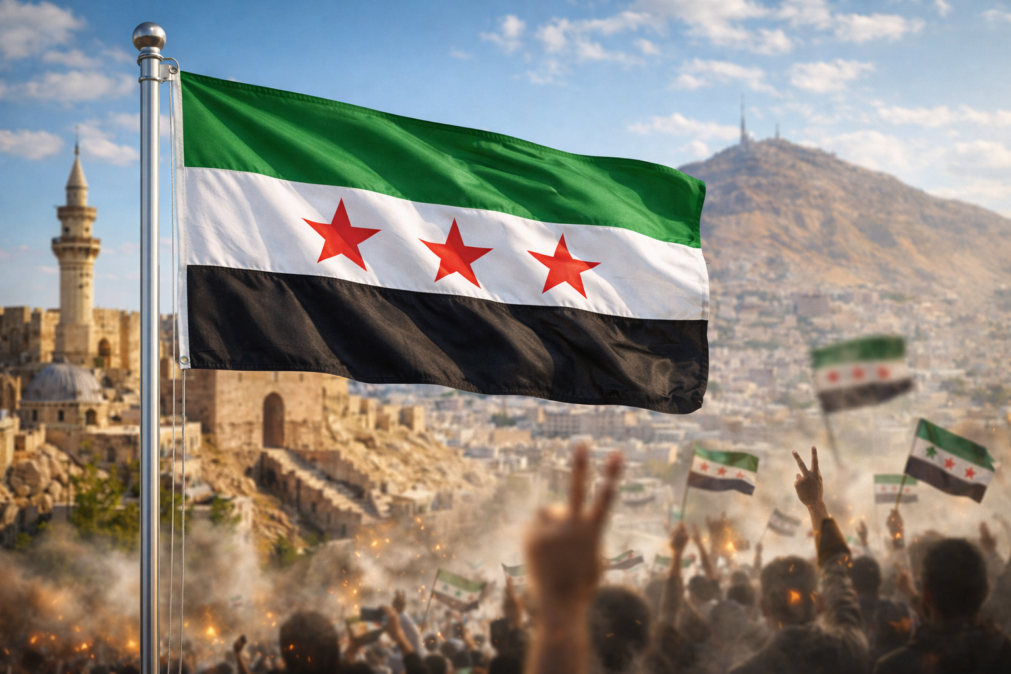
A flag can mean one thing in an official building and something much more personal in a home. For many Syrians, the syria flag is tied to memories of childhood, school ceremonies, national holidays, and family stories. For Syrians living abroad, displaying a flag can be a way to hold onto identity, language, and connection to home.
At the same time, because Syria’s recent decades have involved intense conflict and division, flags have also become symbols of political belief. In demonstrations or public events, a particular flag version can communicate a stance without a single word spoken. That’s why discussions about which syria flag is used can become emotional—because for many people it’s not just design. It’s a statement about the country’s past and future.
Common Mistakes and Misunderstandings
A few mistakes show up repeatedly online:
Mixing Syria with similar regional tricolors
Several countries use red, white, and black stripes. People sometimes assume any red-white-black tricolor is Syria. Stars and emblems are usually what differentiate them.
Posting a historical version without labeling it
Many articles show a flag image without saying which era it represents. Readers then assume it’s the only version, which spreads confusion.
Using incorrect star color or placement
Small design errors happen when people edit images quickly. If you’re aiming for credibility, accuracy in these details makes your content look more trustworthy.
If your blog post includes images, it’s worth adding one sentence explaining the version shown and the context.
Conclusion
The syria flag is a powerful symbol precisely because it carries history, identity, and political meaning all at once. Different versions exist because Syria’s modern story includes major changes, and the flag has shifted with those changes. Once you know what to look for—stripe order, star count, and star color—you can recognize the most common designs and understand why people debate them. If you’re writing, teaching, or simply trying to understand what you’re seeing in the world, learning the story of the syria flag makes everything clearer.
FAQs
1) Why do I see different versions of the syria flag online?
Different historical eras and political contexts used different flag designs. Search results often mix them without explaining the time period.
2) What do the colors on the syria flag mean?
Red is often linked with sacrifice and struggle, white with peace and hope, black with historical memory, and green with heritage. Interpretations can differ by era and viewpoint.
3) What is the meaning of the stars on the syria flag?
Stars typically carry political meaning tied to a specific period. The number of stars can point to different chapters in Syrian history.
4) How can I tell the syria flag apart from similar flags?
Check the stars and their color, and confirm the stripe order. Many regional flags share similar stripes, but the symbols usually differ.
5) Is it okay to use the syria flag in a blog post?
For educational and informational writing, it’s commonly used. Just make sure you present the correct version and describe it clearly so readers aren’t misled.
You May Also Read: The Practical Guide to Genshin Merch: What’s Worth Buying, Where to Look, and How to Shop Smart