









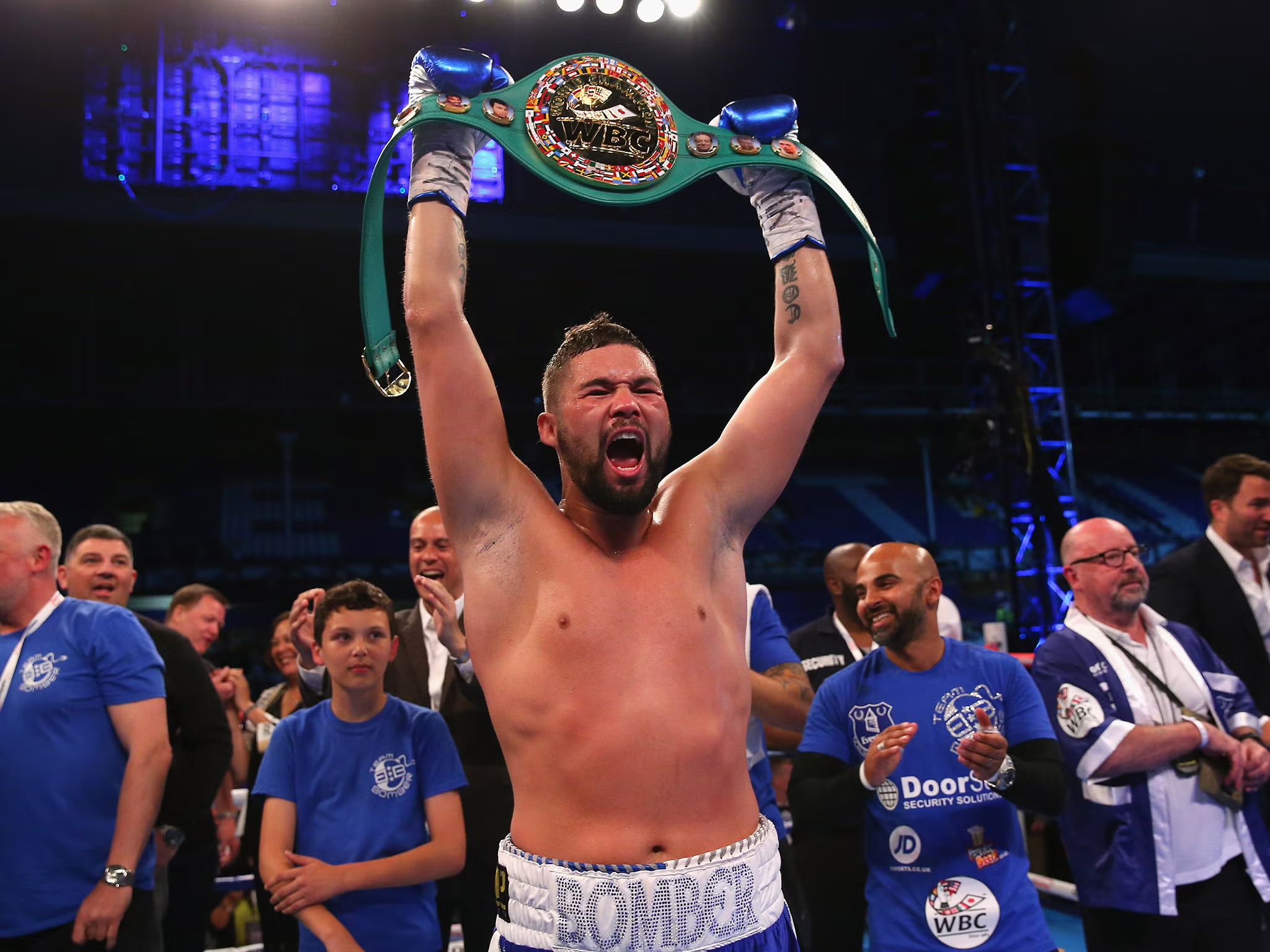
Tony Bellew: The Story of a Champion Who Never Quit
Few British boxers have connected with fans quite like Tony Bellew. He wasn’t known for flashy predictions or an unbeaten record. Instead, he earned respect by taking on difficult opponents, speaking honestly, and giving everything he had every time he stepped into the ring.
Bellew’s journey from Liverpool’s local boxing gyms to becoming a world champion is a reminder that success is rarely straightforward. His career included painful defeats, memorable victories, and moments that tested both his skill and his character. Rather than allowing setbacks to define him, he used them as motivation to improve.
Today, many people know Bellew not only as a former boxer but also as a respected commentator, television personality, and actor. His influence extends well beyond boxing, making his story worth exploring whether you’re a lifelong fan or simply interested in inspiring sporting careers.
Early Life and Love for Boxing
Tony Bellew was born on 30 November 1982 in Liverpool, England. Like many children growing up in the city, sport played an important role in his life. Boxing quickly became more than just an activity—it gave him discipline, purpose, and a clear direction.
Training at a young age taught Bellew lessons that would stay with him throughout his career. Long hours in the gym helped him develop not only physical strength but also patience and resilience. Those qualities later became some of his greatest advantages as a professional fighter.
Liverpool has a proud boxing tradition, and Bellew dreamed of following in the footsteps of the city’s successful fighters. He understood early on that talent alone wouldn’t be enough. Consistent hard work would determine how far he could go.
Building a Strong Amateur Career
Before turning professional, Bellew built an impressive amateur record.
One of his biggest achievements was winning the Amateur Boxing Association (ABA) heavyweight title on multiple occasions. These competitions are highly respected in British boxing and often serve as a stepping stone for future professionals.
Amateur boxing helped Bellew sharpen his technique and ring awareness. Instead of relying only on power, he learned how to control distance, defend effectively, and adjust his tactics during a fight. Those skills became increasingly valuable as the level of competition improved.
The experience also prepared him for the pressures of professional boxing, where every mistake can change the outcome of a fight.
Starting a Professional Career
Bellew made his professional debut in 2007.
Like many young professionals, he spent his early years facing experienced opponents while gradually climbing the rankings. Each victory built confidence, but every fight also revealed areas where he could improve.
One characteristic quickly stood out—Bellew rarely looked for easy opponents. He welcomed challenges because he believed they would help him grow as a boxer.
This mindset earned him respect within the sport long before he fought for a world title.
Success at Domestic Level
Before reaching the world stage, Bellew established himself as one of Britain’s leading fighters.
He captured domestic and regional championships, proving he could consistently perform against quality opposition. Winning these titles wasn’t simply about collecting belts. Each victory moved him closer to competing with the world’s best.
His performances also attracted a larger fan base. Supporters appreciated his straightforward personality and willingness to speak honestly about both his strengths and weaknesses.
Rather than creating an image, Bellew simply remained himself.
Also Read: Nastasja Radulovic: Biography, Speed Skating Career, Background, and Future Potential
The First Major Setback
Every successful athlete faces disappointment, and Bellew was no exception.
His first opportunity to win a world title came against Adonis Stevenson. Although Bellew entered the fight full of confidence, Stevenson successfully defended his championship.
The defeat was difficult, but it became one of the most important moments of Bellew’s career.
Instead of blaming circumstances or making excuses, he carefully reviewed the fight, identified where he had fallen short, and returned to training with renewed determination.
This ability to learn from failure would become one of the defining features of his career.
A Career-Changing Move to Cruiserweight
Sometimes the smartest decision an athlete makes happens outside competition.
For Bellew, moving from light heavyweight to cruiserweight proved exactly that.
The higher weight class suited his natural build far better. Without the strain of cutting as much weight, he entered fights feeling stronger, fresher, and more energetic.
Fans quickly noticed the difference.
His punching power looked more effective, and he appeared increasingly comfortable inside the ring. The move allowed him to perform closer to his full potential.
Becoming WBC Cruiserweight Champion
The biggest night of Bellew’s boxing career arrived in 2016 when he fought Ilunga Makabu for the vacant WBC Cruiserweight World Championship.
The fight didn’t begin the way Bellew had hoped. He was knocked down early, leaving many spectators wondering if his opportunity had slipped away.
What happened next demonstrated exactly why Bellew had earned so much respect.
Rather than losing confidence, he remained calm and gradually changed the momentum of the fight. His pressure increased, his punches became more accurate, and he eventually stopped Makabu to claim the world title.
Winning the championship represented years of persistence. It wasn’t a lucky victory or a surprise result—it was the reward for steady improvement, careful preparation, and refusing to give up after earlier disappointments.
Why the World Title Meant More Than a Belt
For Bellew, becoming world champion was about much more than holding a prestigious title.
Throughout his career, some critics questioned whether he belonged among boxing’s elite. Instead of responding with words, he answered those doubts through his performances.
His victory showed that determination and continuous improvement can sometimes matter more than natural talent alone.
The achievement also inspired young athletes facing their own setbacks. Bellew’s story proved that one defeat doesn’t decide an entire career.
What Made Tony Bellew Different?
Many professional boxers possess speed, strength, and technical ability.
Bellew’s greatest quality was his mindset.
He entered every fight believing he could win, yet he never underestimated his opponents. He prepared carefully, adapted when necessary, and stayed composed under pressure.
Outside the ring, his honesty also made him popular. He celebrated victories without arrogance and accepted defeats without making excuses.
That authenticity helped him build a loyal following throughout his career.
The Rivalry That Changed Everything
If one rivalry helped introduce Tony Bellew to a global audience, it was his two fights with David Haye.
The build-up was intense. Both fighters traded sharp words during interviews and press conferences, creating genuine excitement among boxing fans. Haye entered the first fight as the favourite. He had already won world titles in two weight divisions and was widely regarded as one of Britain’s most explosive punchers.
Bellew, however, never seemed intimidated. He believed preparation would matter more than reputation.
First Fight Against David Haye
When the opening bell rang, the contest lived up to expectations. Haye started brightly, but the momentum shifted after he suffered an Achilles tendon injury during the fight.
Some critics later suggested the injury decided the result. That view overlooks what Bellew did well. He stayed disciplined, kept applying pressure, and forced Haye to work despite his physical problems. Rather than rushing for a finish, Bellew boxed intelligently until the referee stopped the contest.
The victory became the biggest win of his career at that point and proved he could perform under the brightest lights.
Winning the Rematch
A rematch was inevitable.
Many wondered whether Bellew’s first victory had come only because of Haye’s injury. The second fight gave both men the chance to answer that question.
Bellew removed any doubt. He controlled the contest, landed the cleaner punches, and secured another stoppage victory.
Beating the same high-profile opponent twice strengthened his reputation and made him one of Britain’s most recognizable sporting figures.
Facing Oleksandr Usyk
In 2018, Bellew accepted perhaps the toughest challenge available. He stepped into the ring with Oleksandr Usyk, the undefeated and undisputed cruiserweight champion.
It was a risky decision.
Usyk was widely considered one of the most technically gifted boxers in the world. Even so, Bellew welcomed the opportunity because he wanted to test himself against the very best.
For several rounds, his tactics worked well. He moved intelligently, picked his moments, and won praise for making the fight competitive.
As the contest progressed, Usyk’s accuracy and relentless pressure gradually took control. A powerful combination ended the fight in the eighth round.
Although Bellew lost, his performance earned respect across the boxing world. He chose to finish his career against the division’s best champion rather than take an easier path.
Knowing When to Walk Away
After the Usyk fight, Bellew announced his retirement from professional boxing.
It wasn’t a decision made in frustration. He had already achieved what many fighters dream of: winning a world title, headlining major events, and securing his family’s future.
Retiring at the right time can be difficult for elite athletes. Bellew believed it was better to leave the sport with his health and reputation intact than continue chasing one more payday.
Looking back, that decision has been widely respected.
A Successful Life After Boxing
Many former athletes struggle to find direction once their careers end. Bellew made the transition smoothly.
His knowledge of boxing and his straightforward personality made him a natural fit for television.
Today, he regularly works as a commentator and analyst, breaking down fights for viewers. Instead of relying on complicated language, he explains tactics in a way that casual fans can easily understand while still offering insights that experienced followers appreciate.
His opinions are respected because they come from personal experience inside the ring.
Stepping Into the Film Industry
Bellew also found success in acting.
He played Ricky Conlan, the defending world champion, in the Creed film series. Unlike many athletes who move into acting, Bellew didn’t need to learn how to look like a boxer. Years of professional competition gave the role an authenticity audiences noticed.
His appearance introduced him to viewers who had little knowledge of his boxing career and showed that athletes can succeed in different industries with the right attitude and preparation.
Tony Bellew’s Boxing Style
Bellew wasn’t the tallest, fastest, or hardest puncher in every fight, yet he consistently found ways to compete with elite opponents.
Several qualities defined his style:
- Strong mental toughness in difficult moments.
- Powerful left hook and effective combinations.
- Good understanding of distance and timing.
- Willingness to adapt during a fight.
- High level of fitness and preparation.
Perhaps his greatest strength was his ability to remain composed under pressure. When a fight became difficult, he rarely abandoned his game plan.
Personal Life
Away from boxing, Bellew has always spoken about the importance of family.
He is married to Rachael Bellew, and together they have four sons. Although his career brought public attention, he has generally kept his private life out of the spotlight.
Bellew also remains proud of his Liverpool roots. He often credits the city for shaping his work ethic and determination, and he continues to support community and charitable causes connected to his hometown.
Also Read: Jammie Booker: What Happened, Why It Matters, and What It Means for Strength Sports
Tony Bellew’s Net Worth
Years of success inside and outside the ring have allowed Bellew to build a comfortable financial future.
His earnings have come from several sources, including:
- Professional boxing purses.
- Pay-per-view events.
- Television work.
- Boxing commentary.
- Acting.
- Sponsorship and media appearances.
His net worth is commonly estimated at around $15 million, although exact figures have never been publicly confirmed. What stands out more than the number itself is how carefully Bellew planned for life after retirement rather than relying solely on prize money.
The Legacy He Leaves Behind
Championship belts eventually change hands, but a fighter’s reputation lasts much longer.
Tony Bellew will be remembered as someone who embraced challenges instead of avoiding them. He rebuilt his career after setbacks, became a world champion, and retired on his own terms.
His story also shows that success isn’t always about having the most natural talent. Consistency, preparation, and resilience often matter just as much.
For younger fighters, Bellew’s career is proof that determination can open doors that once seemed out of reach.
Lessons We Can Learn From Tony Bellew
Bellew’s journey offers valuable lessons beyond boxing.
Be Patient With Progress
Success rarely happens overnight. Bellew spent years improving before becoming a world champion.
Learn From Setbacks
Every defeat became an opportunity to improve rather than a reason to quit.
Make Smart Career Decisions
Moving to cruiserweight transformed his career because he recognized where he could perform at his best.
Prepare for the Future
His smooth transition into television and media highlights the importance of planning for life after your first career ends.
FAQs
Who is Tony Bellew?
Tony Bellew is a retired British professional boxer who won the WBC Cruiserweight World Championship. He now works as a boxing commentator, television personality, and actor.
Why is Tony Bellew famous?
He is best known for becoming a world champion, defeating David Haye twice, and appearing in the Creed films.
How many professional fights did Tony Bellew have?
Bellew finished his professional career with 34 fights, recording 30 wins, 3 losses, and 1 draw.
Why did Tony Bellew retire?
He retired after losing to Oleksandr Usyk in 2018, believing he had achieved his goals and wanting to leave the sport while still performing at a high level.
Is Tony Bellew still involved in boxing?
Yes. He regularly appears as a boxing analyst and commentator, sharing expert insights before and after major fights.
What can young athletes learn from Tony Bellew?
His career shows the value of hard work, resilience, adaptability, and long-term planning. Those qualities helped him succeed both inside and outside the ring.
Conclusion
Tony Bellew’s career was never built on hype. It was built on persistence, honest self-belief, and a willingness to face the toughest challenges available. From local boxing gyms in Liverpool to winning a world championship and competing on some of the sport’s biggest stages, he earned every achievement through dedication and hard work.
Retirement marked the beginning of another successful chapter rather than the end of his story. Whether analysing fights on television, appearing in films, or inspiring young athletes, Bellew continues to make an impact.
His legacy goes beyond titles and memorable victories. It serves as a reminder that lasting success comes from staying committed to your goals, learning from setbacks, and continuing to grow long after the spotlight has moved on.
You May Also Read: Kalen DeBoer: The Coach Redefining Alabama’s Next Chapter